Showing posts with label Context. Show all posts

Tuesday, 28 March 2017

Unit X - Mid-Point Evaluation

I have learned a lot from my practice unit, which has changed my attitude towards my unit X project. I will refrain from being too ambitious regarding work load, and instead focus my energy into my weaving. This will ensure I am using my time to thoroughly develop and resolve my samples.

Time management plan

The digital designs that I have produced are time efficient, because they will enrich my weaving compositionally, whilst also allowing me to participate in an outward facing project. I aim to produce a collection of digitally printed designs on fabric to enter into the 'Limitless' brief by i-Dott.

My digital drawing designs

I am focusing on my strengths of using unconventional yarns and combining crochet elements. Instead of surface embellishment, I am embellishing the weave from within the structure. This will push the boundaries of my weaving, challenging what is practical, whilst providing me with a structured format to work with.

Lily Tennant

I aim to produce a collection of meter long passementerie weaves, inspired by Rebecca Louise Law's installation consisting of mass amounts of long floral forms hanging from supports. I intended for my weaves to become jewellery or fashion pieces, however, it was suggested that I display my work on bobbins, because it is more practical, similar to how Lily Tennant presents her work.

Friday, 24 February 2017

Unit X - Week 1

Continuing from my strengths of my practice unit, I am focusing on passementerie and unconventional beauty found within nature, and the strength in mass of the miniature. I created a narrow 1.5" black and white mercerised cotton warp. This allows me to avoid limitations of colour and focus on the edges of my weaves.

Warp plan based on my photograph of butterfly

My context is influenced by Samuel & Sons lavishly decorative trimmings. I aim to push the boundaries of a trim to jewellery or installation similar to Rebecca Louise Law. 

Rebecca Louise Law installation, Samuel & Sons trimming

I was inspired by John Piper's expressive drawing techniques, so I experimented with wax crayons and inks. The wax successfully captures the hard, shiny surfaces of crystallises, and the ink residue forms the interesting surface patterns. These drawings have inspired me to use unconventional yarns such as lurex and monofilament.

My photograph of crystallises & my drawings (wax & ink)

Friday, 3 February 2017

Practice - Week 16

I revisited my Hand & Lock competition, focusing on hand embroidery techniques instead. I was inspired by previous winner Devi Vallabhaneni, who created a 3D beadwork installation. 

Devi Vallabhaneni

I created a fabric manipulated brooch, influenced by Vanities: incorporating floral inspiration in response to the 'celebrations' brief. My colours gradually fade from bright pinks and yellows to symbolise how life and death is celebrated. I incorporated beadwork and wire to strengthen my reasons for choosing the hand-embroidery category.

Board submission for Hand & Lock Competition

I think my concept was strong, however, I struggled to create a successful final piece because I did not leave myself enough time to develop my work. I was too ambitious with my time, and failed to organise this live project.

Friday, 27 January 2017

Practice - Week 15

The diverse weft qualities created varying structure and scale. My weave and foiling techniques created exquisite results regarding form and aesthetic.

My final weave collection (project 2)

I modelled my weave as a garment, creating a gothic essence.

Modelling weave as garment

I also accentuated my sample that resembled armour, by modelling it as an arm panel.

Modelling weaves as arm panels

Friday, 25 November 2016

Practice - Week 9

I began a work placement for a bridal studio 'Sandra's Studio' in London. I found the inspiration boards interesting, and compared them to the final garments. I helped to stitch inserts of a bodice, which required thick, strong thread with small, hidden stitches.

I practiced stitching lace onto fabric and was introduced to new machinery. I learned the importance of ironing seams in certain directions, as it affects how the garment hangs and avoids puckering the fabric. I was also introduced to lace and silk suppliers and participated in a client's fitting, where final adjustments were made to the bride's dress.

Pattern cutting

I was taught how to create my own pattern for a child's dress, which requires careful calculations and proportions. I ensured I cut out the fabric on-grain, to keep the pattern consistent. I attached the underlay to the outer layer using an industrial Brother machine, which allowed me to accurately sew. I found the overlocker difficult to use, as it required precision and excess fabric to work properly. Mistakes would ruin the garment, considering the machine cuts the fabric whilst it stitches.

My dress modelled on baby

I am pleased with the result I obtained, but found the process tedious and difficult. The floral pattern links to the Hand & Lock 'celebrations' brief, as flowers are used to celebrate special events such as weddings and birthdays. It also relates to the idea of "play" mentioned within the brief: my response being 'child's play'. My dress demonstrates technical construction skills, but is not an appropriate entry for the competition, because it lacks an innovative use of these skills.

Friday, 18 November 2016

Practice - Week 8

During my group tutorial somebody noticed my work resembled bridal garters. Due to the nature of my woven samples, Stephy Ann lingerie was suggested as a contextual reference.

Stephy Ann Bridal Garter - Context

I identified my subtle colour blending as a strength in my weaving. However, my peach rose inspired weaves are less successful than my previous weaves, because the wool weft shrunk when I washed them.

Modelling weave as garter

I photographed my weaves in the garter context, which is an improvement to my previous placements and showcased my weaves to their full potential.

Board submission for Bradford Textiles Competition

I produced a woven sample to enter the Bradford Textiles Competition, which focuses on embellishment within the weaving, with use of textured yarns, to comply with the  woven requirements of the brief.

Friday, 11 November 2016

Practice - Week 7

I was satisfied with my white floral samples, and decided to explore something more colourful. I focused on a different flower, dissecting the two tones of pink of the petal. This translated well within my weaving and created a distinct two-tone effect. The wool I originally used was unsuccessful, because it failed to capture the quality and elegance like the mercerised cotton did.

My weaving

I created crochet chains in response to the remaining colours of the flower. The centre of the flower was translated with yellow French knots to capture the rich texture. I altered the placement of my weaving on the body, as the structure makes it more suitable as a decorative cuff.

Embroidered weave modelled as cuff

I reflected on my aims and divided my time for the remainder of this unit in conjunction with my proposal. I aim to finish my first self-initiated project, enter two outward facing projects, participate in a bridal studio work placement and produce a darker second self-initiated project in relation to the commencing winter month, inspired by Alexander McQueen.

Time management plan

I discussed my proposed schedule with my tutor about my outward facing projects. I was advised to participate in work experience for one week, so that I learn essential skills within a reasonable time-frame. I was also advised to extend my time frame for my Hand & Lock project, to ensure I spend enough time developing a final piece.

Friday, 4 November 2016

Practice - Week 6

With each weave, I noticed improvement as my techniques became more refined. I also started to obtain a vision of my context: to produce neck pieces. The space between the two woven structures could offer an unusual element to my fashion pieces.

Embellished weave

I created floral forms that embellished the surface of my weave, which I placed in a repetitive format to create a sense of order. This was a contrast to the opposite side which was an entanglement of embellished yarns to emulate flower buds. However, the cornely moss technique created a more refined result. I also experimented by incorporating fabrics and chains of crochet. I attached sheer, lightweight fabric to the edge to create a ruffle, puckered with the embellisher. This developed my neckpiece to encapsulate the body.

The weave was modelled as a neckpiece, but the result I achieved was not what I desired. The nature of the weave was not appropriate for that surface of the body: the structure was incompatible, because I did not consider the width of the shoulders and shape of the neck.


Unsuccessful modelling weave as neck piece

Friday, 28 October 2016

Practice - Week 5

During my presentation feedback, artists were suggested for further inspiration. Laura McPherson's use of lines of colour relate well to my colour proportion work. Her structures are interesting and offer compositional solutions.

Knit by Laura McPherson

This Is Colossal's website offered a range of contexts I could explore. In particular, Rebecca Louise Law's floral installation could be a potential context for my passementerie pieces. I could create a mass collection of long, narrow structures that hang together to create a large installation.

Rebecca Louise Law

I believe I require the structured format and time-span involved with weaving to use my time efficiently. Although the warp is restrictive, the weave rotation motivates me to produce work to a schedule, which enhances my productivity. I created a warp consisting of alternating white and cream mercerised cotton to allow complete freedom of colour with my weft. It consists of two narrow sections with a central gap to create interest.

Unsuccessful weave

My first plain weaving based on my colour proportion was unsuccessful because it was too bold and had no substance, so I created a series of drawings which inspired me to change my entire attitude towards my weaving technique.

Drawings & design ideas
I used the structure of my warp to represent the composition of my floral reference. I inlayed yarns to create the texture of the floral elements, which gave my weaving life and movement. I then decided to explore this further with embroidery machines, where I refined my idea.

Plain weave & inlay yarns

Friday, 14 October 2016

Practice - Week 3

Elie Saab was suggested as context for my work, which relates to my floral concept. I could potentially create a collection of forms to embellish a garment with. This also inspired me to explore form further as three-dimensional. I incorporated wire to create structure, resulting in ruffles and repeated forms.

Elie Saab

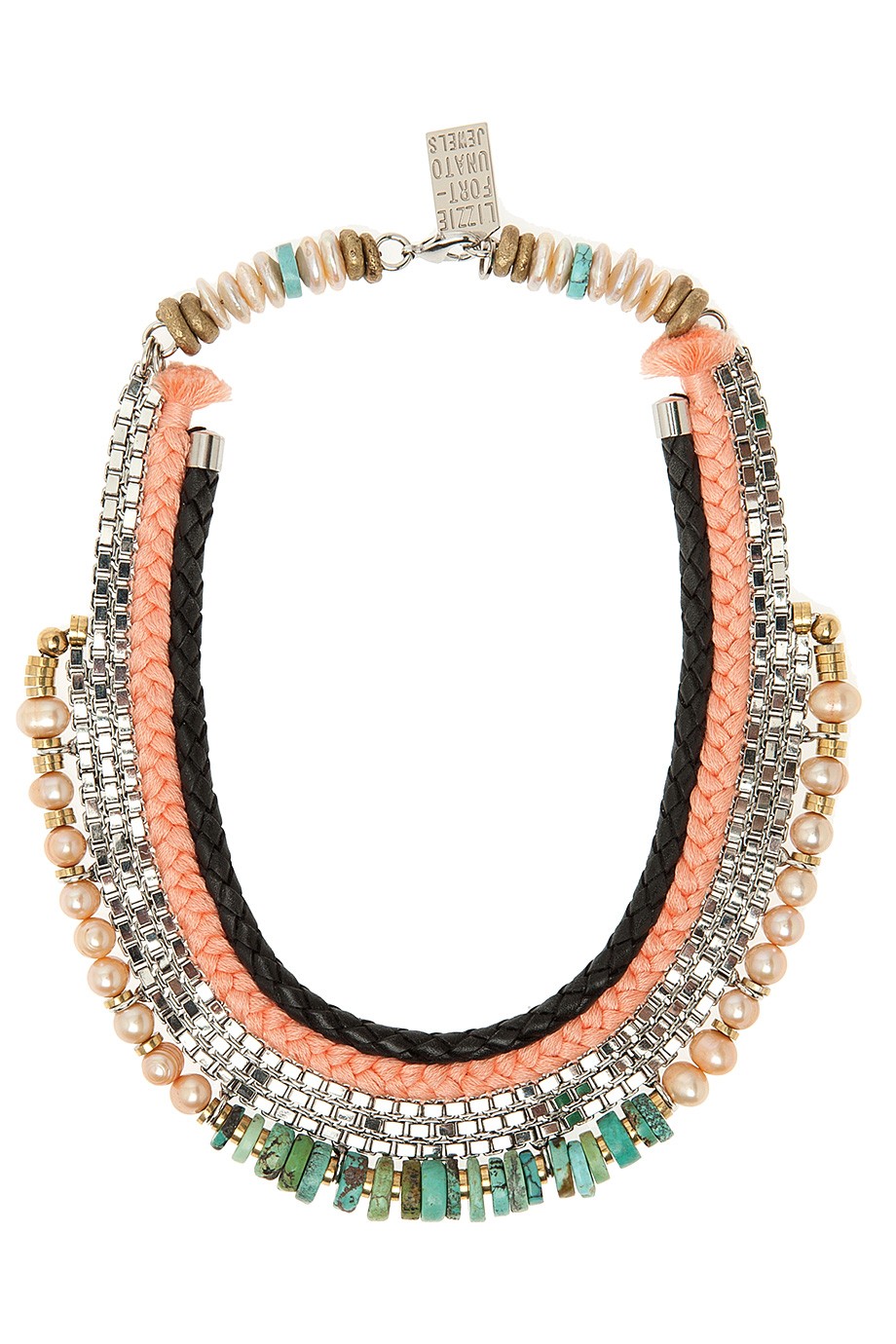
I improved my crochet form by using thicker yarn, however, I preferred the crochet chain before I constructed it into a 3D form. This inspired me to perhaps focus on trimmings of garments or jewellery. I discovered Lizzie Fortunato, who incorporates elements similar to crocheted structures in her necklaces.

Lizzie Fortunato